Delhi Assembly Speaker Vijender Gupta has said that the legislature has undertaken a series of initiatives aimed at preserving and promoting country’s parliamentary heritage through archival conservation, historical research, documentaries, publications and public outreach programmes.
Referring to the vision of balancing heritage with development, Gupta said India can move confidently towards the future only when it remains firmly anchored in its civilizational and democratic roots.
Advertisement
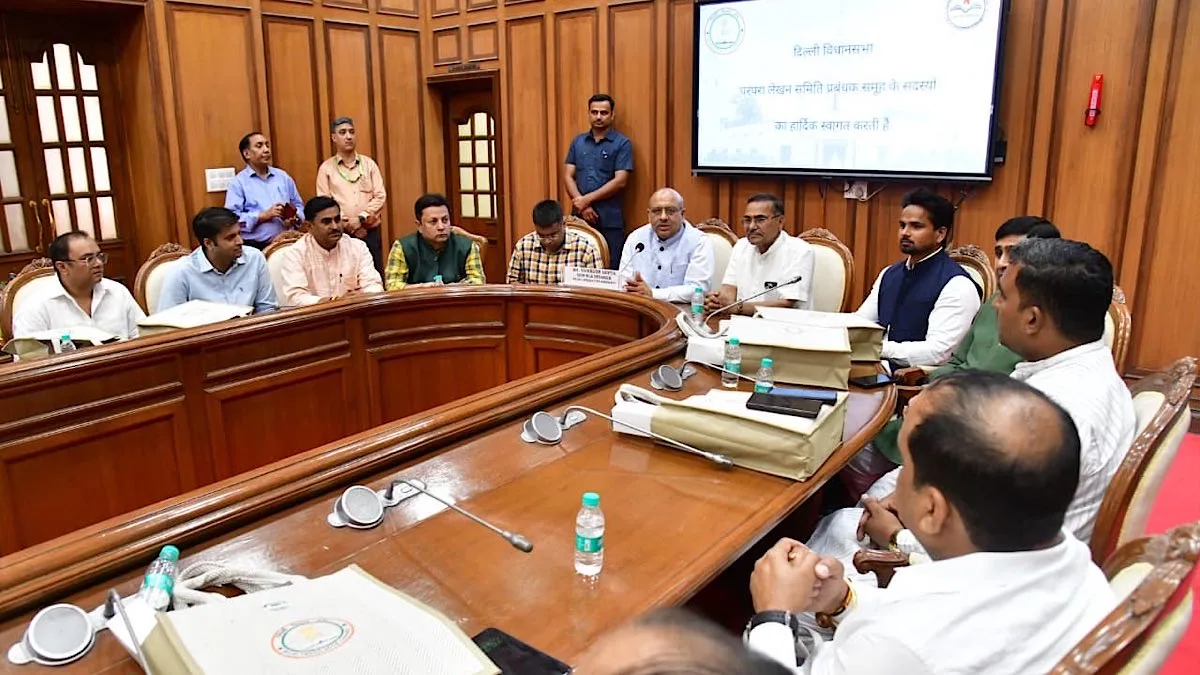
Vijender Gupta, who was addressing a delegation of the Parampara Lekhan Samiti Group, Delhi State Unit, the research wing of the Rashtriya Swayamsevak Sangh (RSS), apprised them about the ongoing efforts to establish a Legislative e-Sangrahalaya and develop a Light and Sound Show at the Vidhansabha premises to showcase the institution’s rich democratic legacy and its association with several landmark events of India’s freedom movement.
The delegation had visited the Delhi Assembly on Thursday, while Gupta informed them that the heritage initiatives by the legislature are being pursued alongside modern governance reforms, including paperless functioning under the National e-Vidhan Application (NeVA) and the Assembly’s transformation into the country’s first fully solar-powered legislative institution.
He paid special tribute to Veer Vithal Bhai Patel, describing him as one of the foremost parliamentary leaders of the freedom movement.
He observed that the most decisive phase of India’s struggle for independence coincided with the years of Vithalbhai Patel’s public life and contributions.
The Speaker remarked that while numerous individuals played historic roles in securing country’s freedom, several of these national figures have not received the recognition they deserve in public discourse.
Speaker emphasized that the Assembly’s heritage initiatives seek to present a more complete and fact-based account of India’s democratic and nationalist journey by bringing such contributions back into national memory.
Gupta further highlighted the unique historical significance of the Assembly building, which served as the seat of the erstwhile Central Legislative Assembly during some of the most defining years of India’s freedom movement.